Gus
Paludeti
Paludeti

User Research | Product Designer | UI/UX Designer
December 2022 - February 2023 (8 weeks)
I designed an app to help recently relocated young adults feel confident in their new environment. It provides information on nearby amenities, events, and points of interest, boosting their familiarity and sense of belonging.
Living in the heart of the Silicon Valley I’ve meet many young adults who’ve relocated here for better opportunities. I noticed that many of my peers would have a hard time acclimating to their new environment. This sparked the question - How can we make people feel more comfortable in their new environment?
In the discovery phase, I conducted user interviews to understand the tools and activities employed by my target users during relocation.
• Has relocated within the last four years
• Between the ages of 25-40
• Interviewed five participants ranging from ages 28-36
• Interviews were held via Zoom
• Interviews were semi structured with a discussion guideclick here for discussion guide
• What led you to relocate?
• What was going through your mind the first couple of weeks after you relocated?
• Could you name a couple of resources you utilize to gather information on your new environment?
• Would it be possible for you to show me some of the tools you used?
• What sorts of information did you look for when you relocated? Why?
• What types of information did you have a hard time finding? Why?
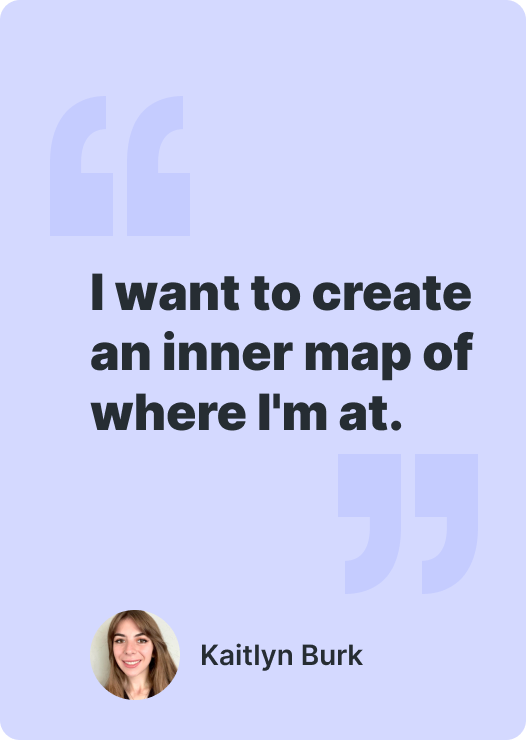
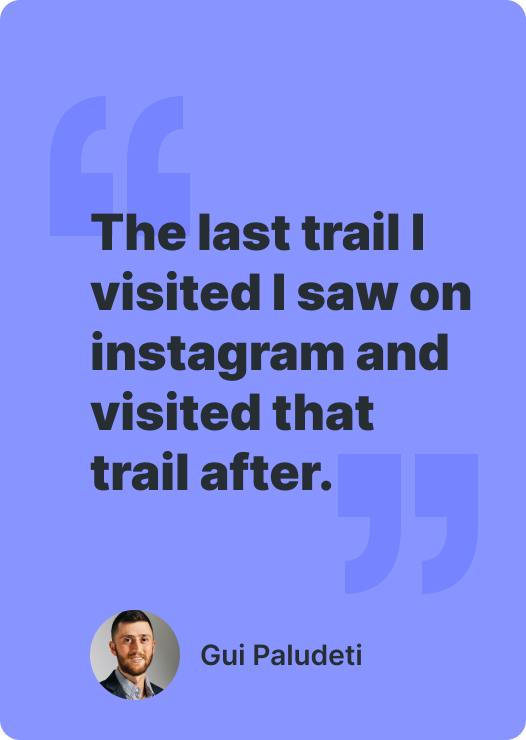
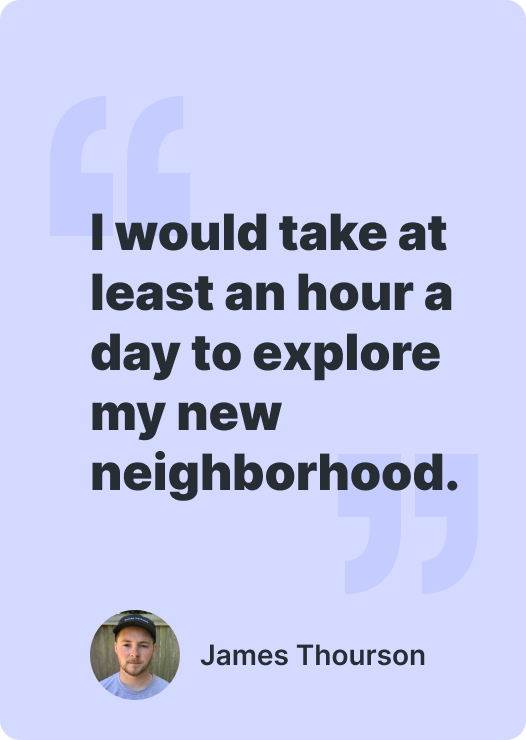

Participants like to walk around their neighborhood to see what’s around them.

Participants wanted to know if the area was safe before exploring.that could discourage younger users.

Participants want to have a sense of belonging to their new environment due to the lack of people they know.

Participants care about what their new environment has to offer, such as food and activities, as young adults tend to eat out a lot.
After conducting user interviews and gathering valuable insights, I proceeded to conduct a competitive analysis on three specific websites that were mentioned by the interviewees. Additionally, I included two other popular competitors in my analysis.


Nextdoor's distinct emphasis on the local community sets it apart, but its predominantly mature user base might discourage younger individuals.

Yelp's focus on local businesses leaves a gap for community-based activities and lesser-known local attractions.

There is an untapped market opportunity for young adults seeking to establish themselves in a new area.
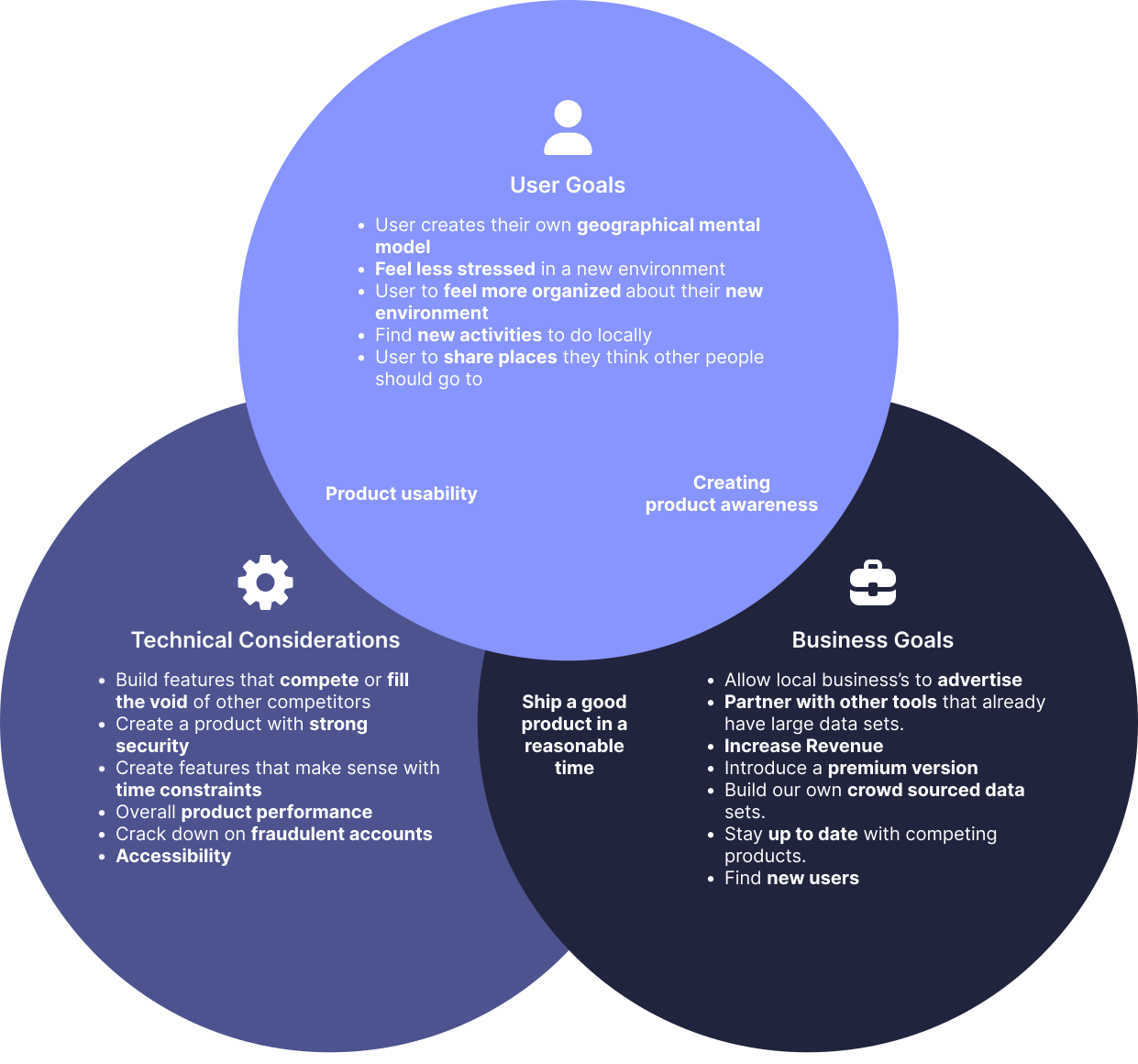
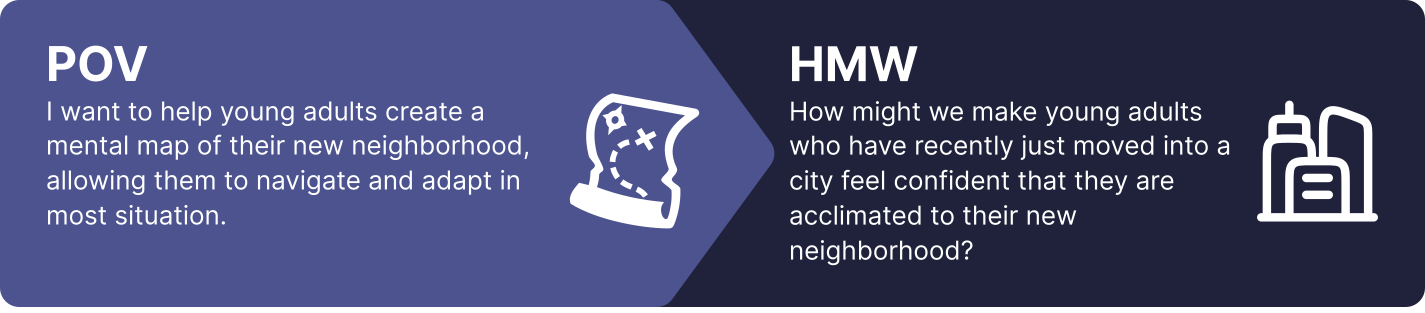
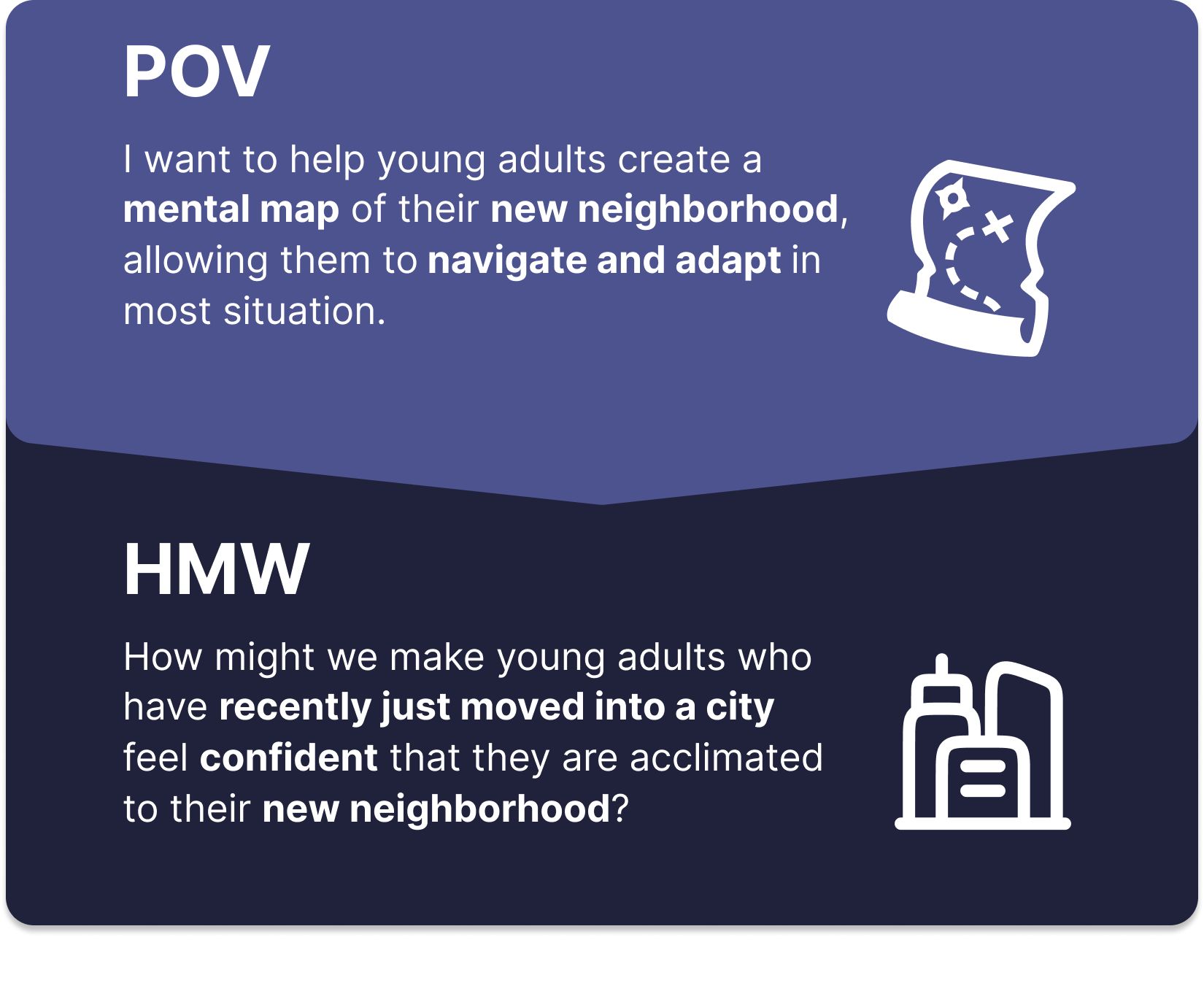
By empathizing with users and understanding their tools, I established realistic goals that harmonized technical constraints with user and business needs.
After conducting user interviews and gathering valuable insights, I proceeded to conduct a competitive analysis on three specific websites that were mentioned by the interviewees. Additionally, I included two other popular competitors in my analysis.
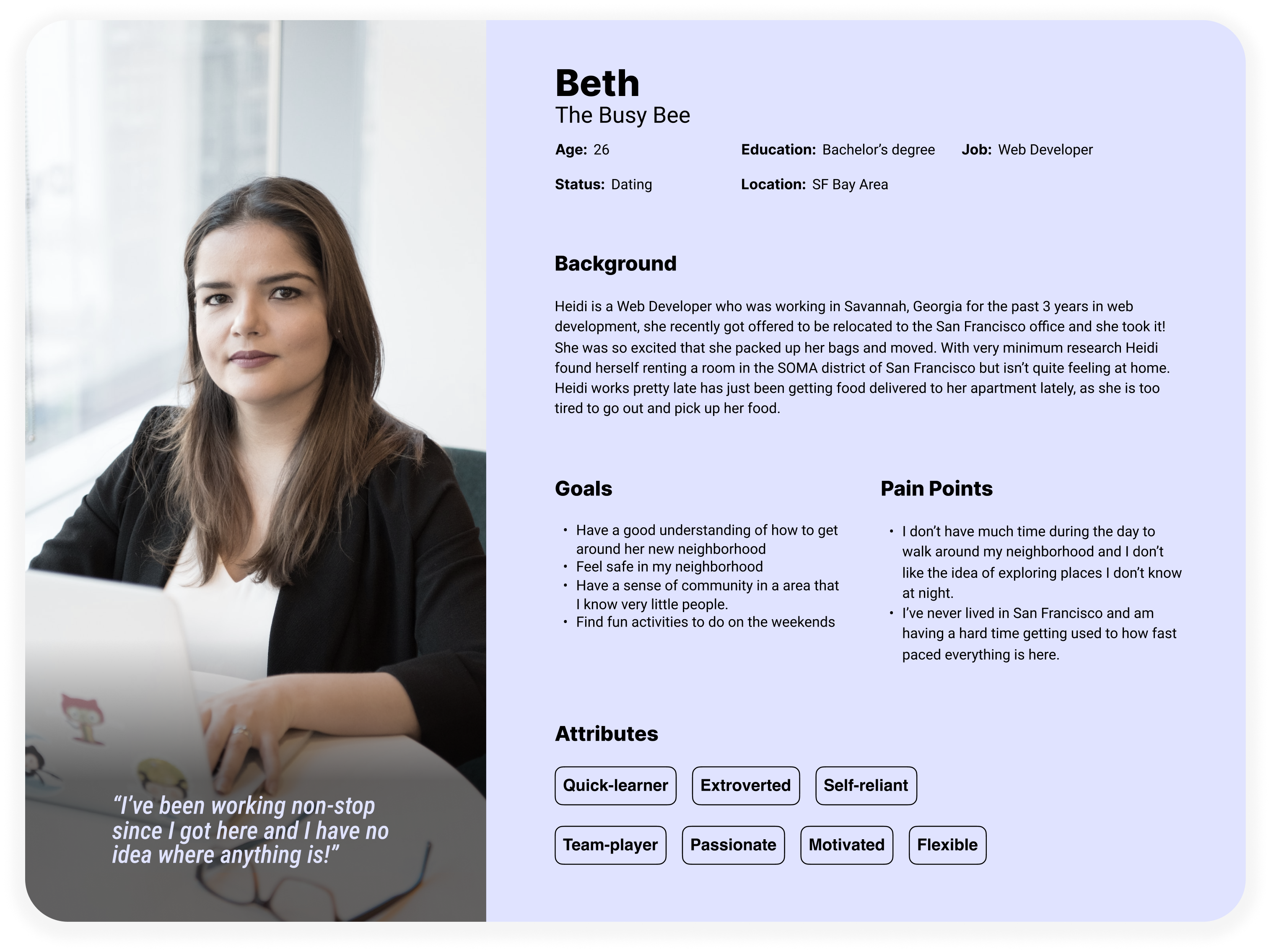
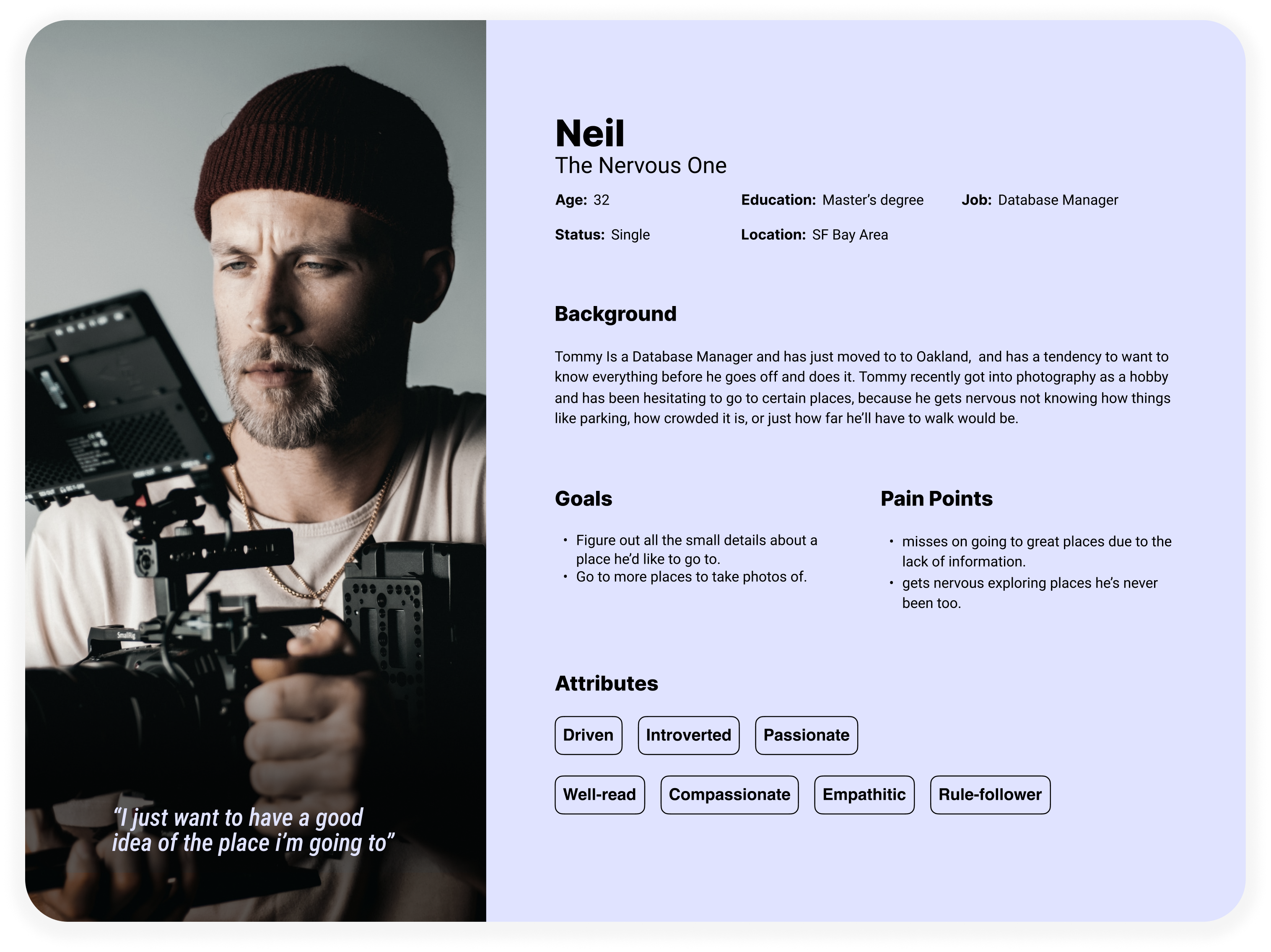
Using user insights and clearly defined goals, I created two user personas. These personas served as a guide, ensuring that my design decisions were centered around the needs of the intended users.
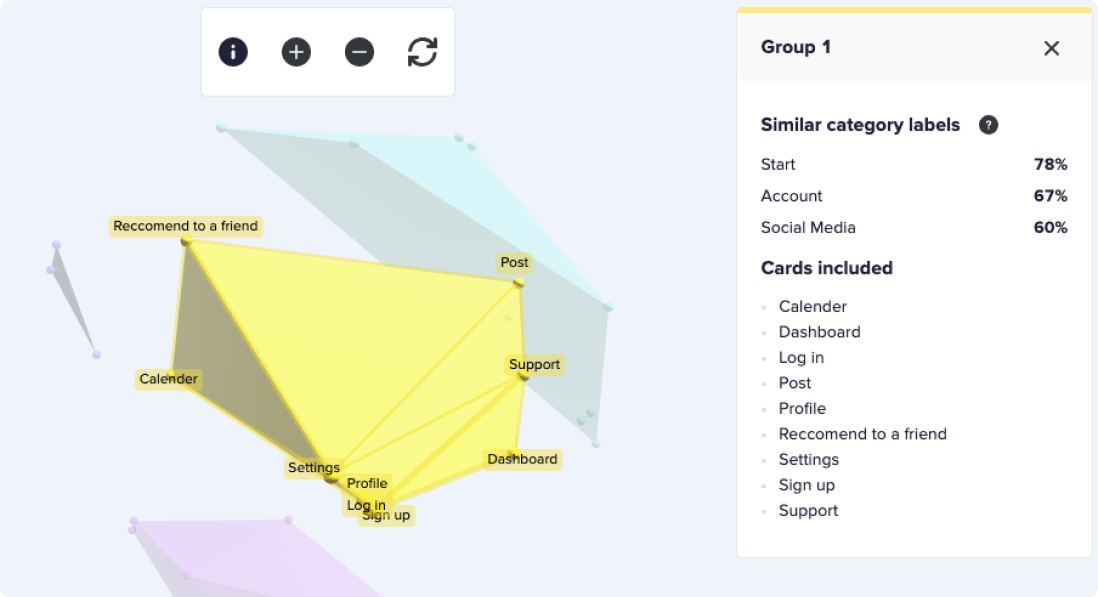
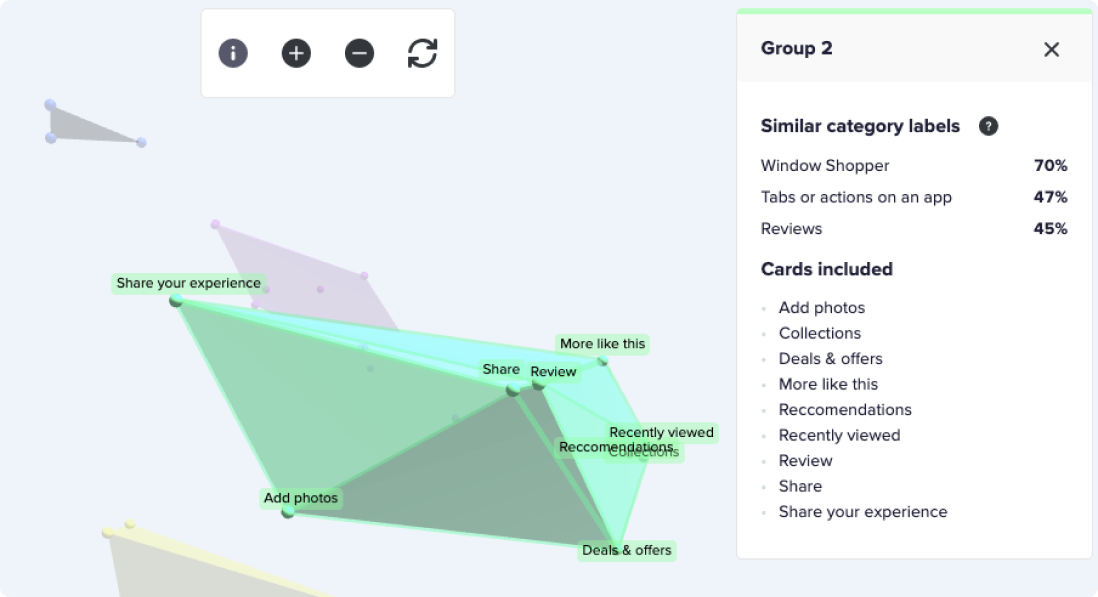
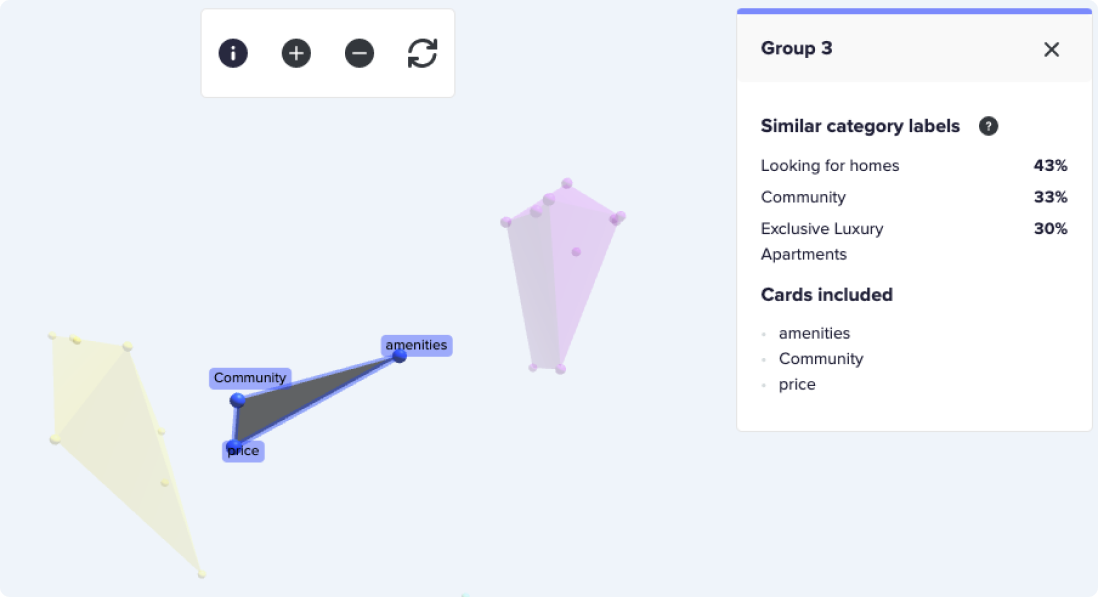
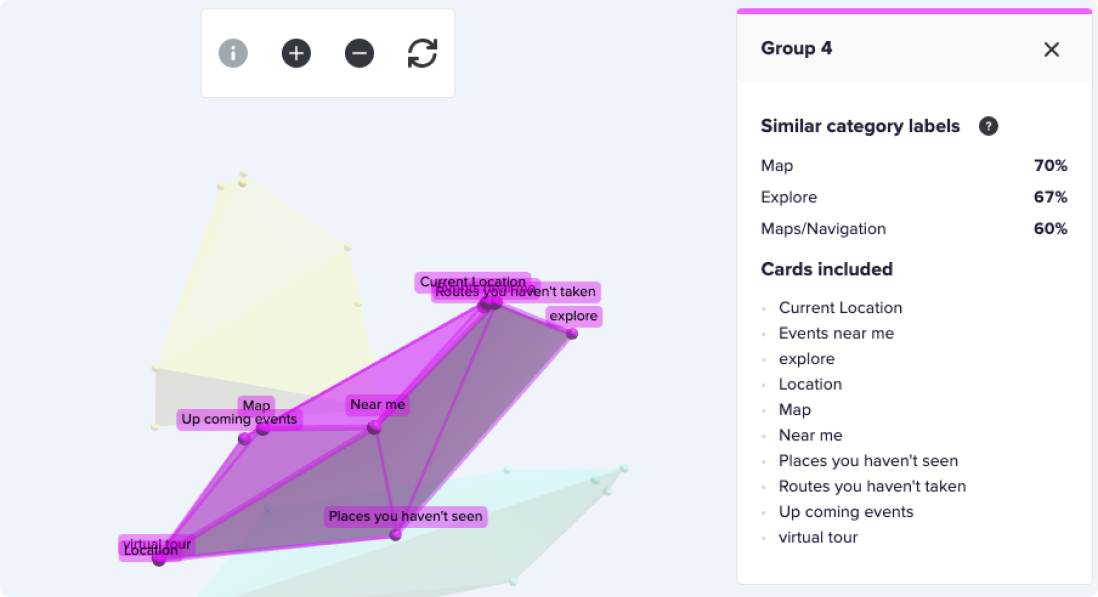
I conducted an open card sorting via Optimal Workshops with four adults who have recently relocated ages 28-32, this informed Atlas' information architecture.
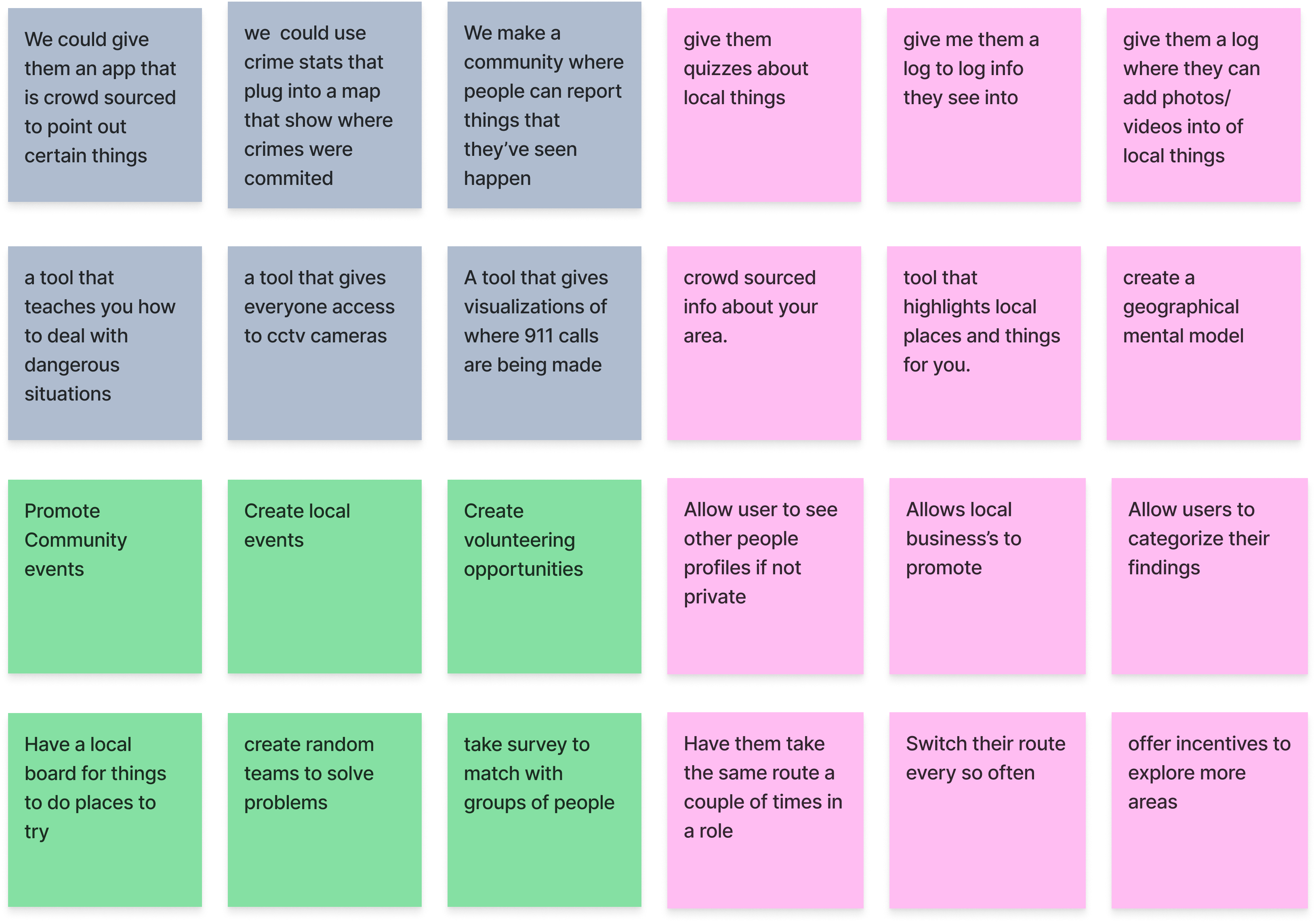
Method - Time Constraint: Through setting a time constraint I was able to think more abstract and widen my ideation process.
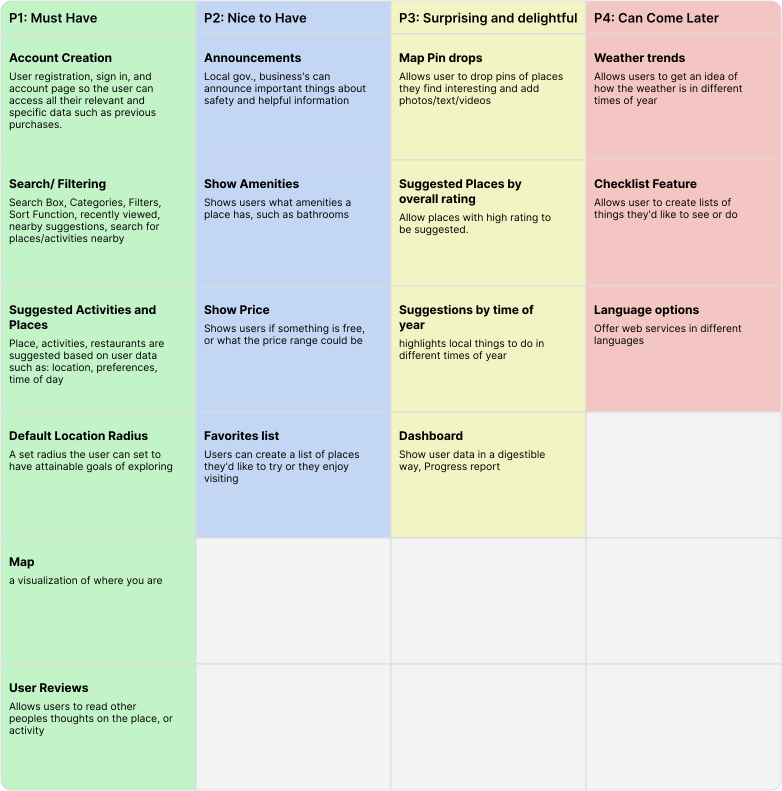
After going wide in my ideation process I narrowed down my possible solutions and evaluated the importance of the feature.
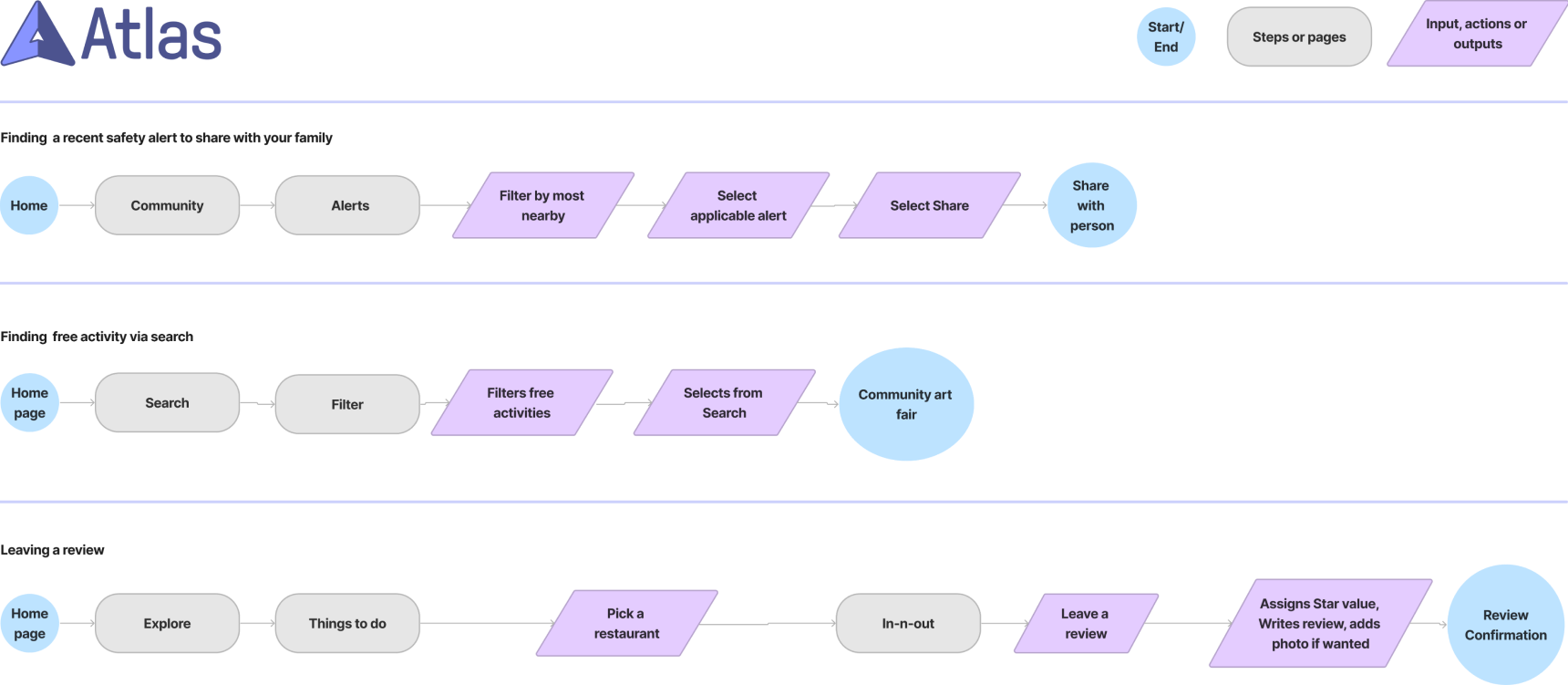
Based on the information architecture, I developed a user-centric sitemap that aligned with the cognitive patterns of my users. Utilizing this sitemap as a foundation, I referred back to the user personas to determine the most crucial task flows for testing.
• Sharing an event - promotes events and allows users to interact with others
• Find free activities - promoting community building and exploring
• Leaving a review - allows users to actively participate in the community
I focused on mobile-first solutions for Atlas. Through iterative exploration of multiple low-fidelity concepts, I discovered design patterns that better aligned with my target users. Seeking feedback from a panel of peers, and my mentor during this stage provided valuable insights into any overlooked common patterns. By incorporating widely recognized design patterns, I ensured intuitive navigation for users within Atlas.
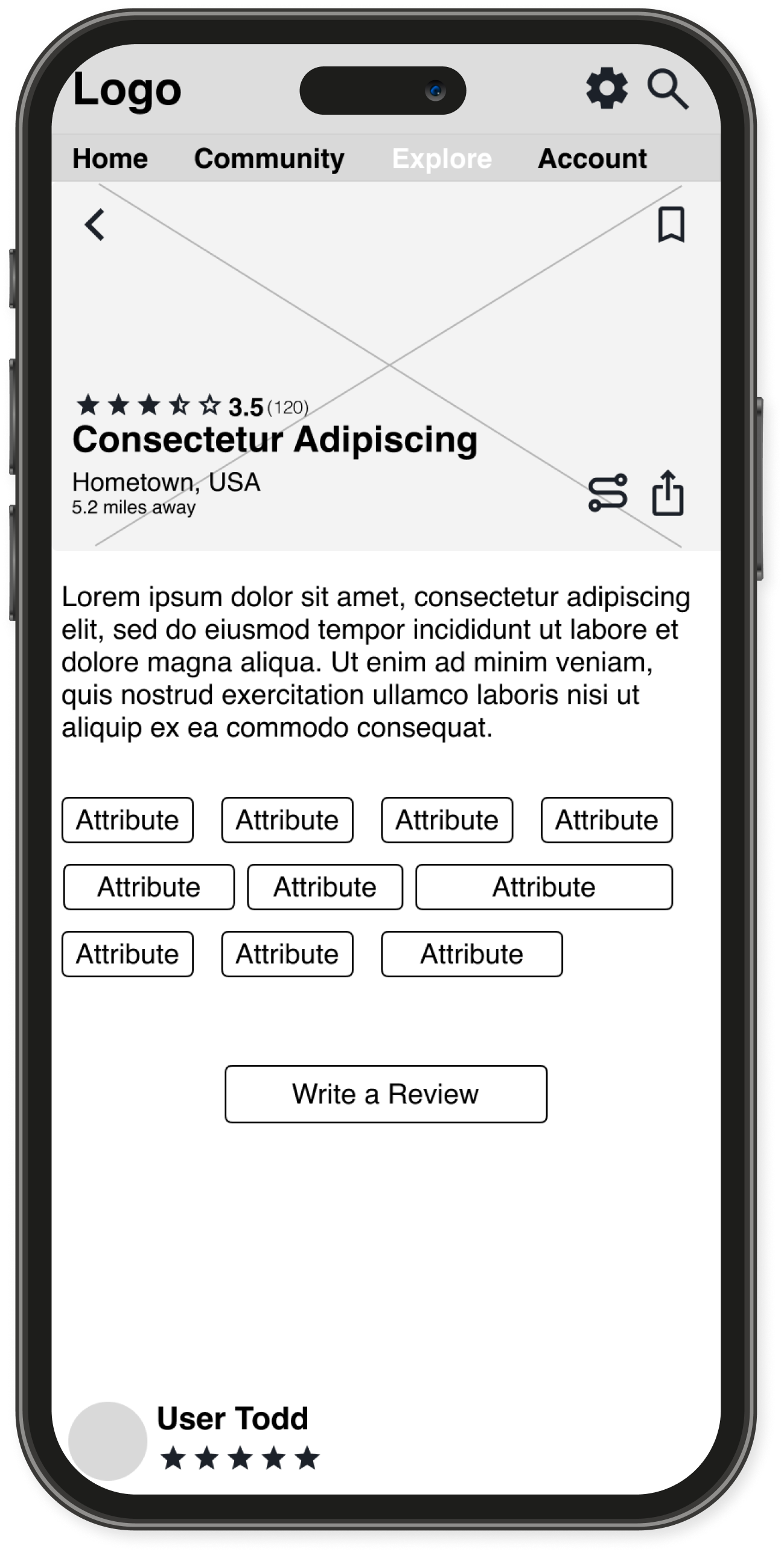

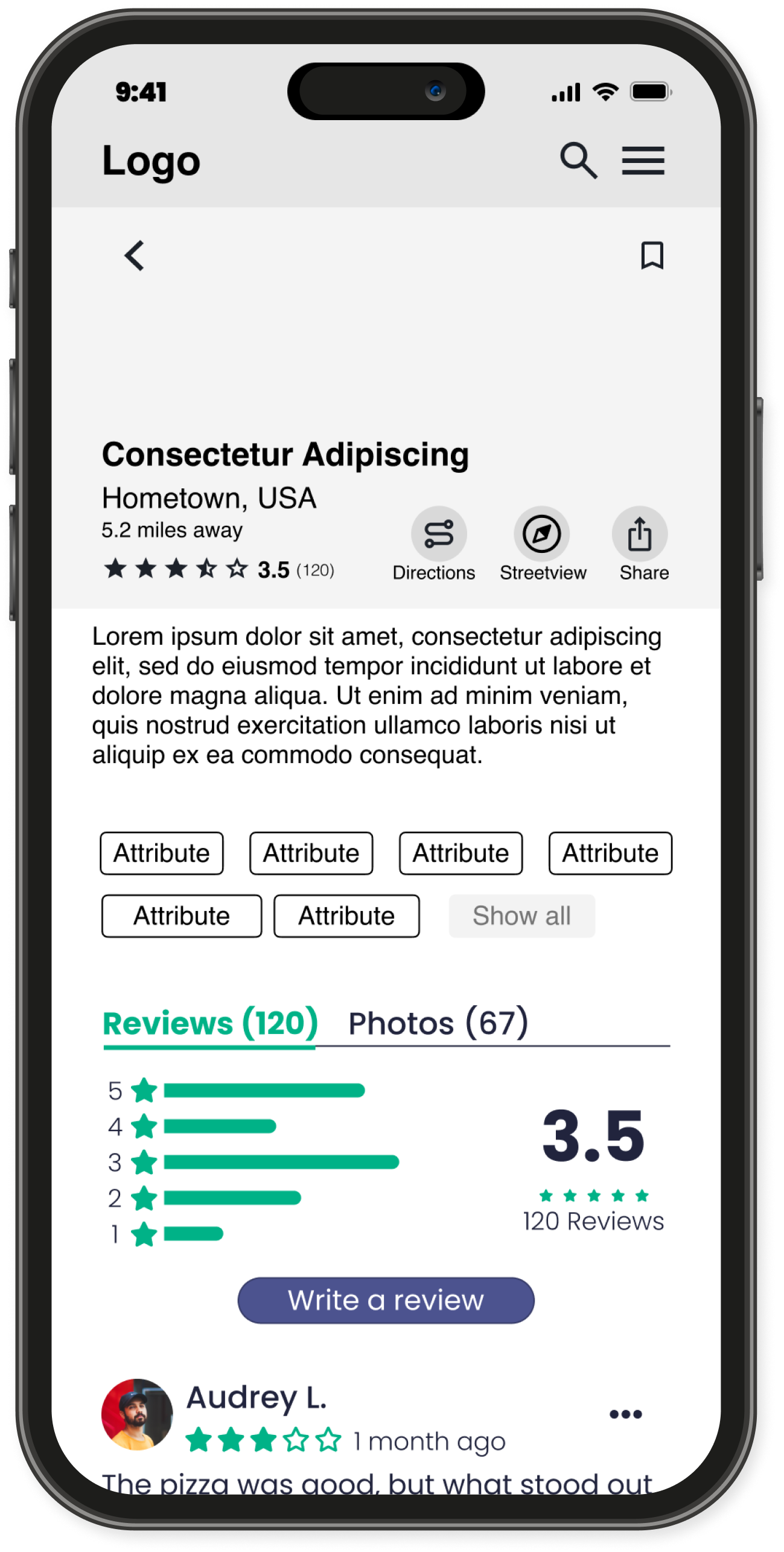
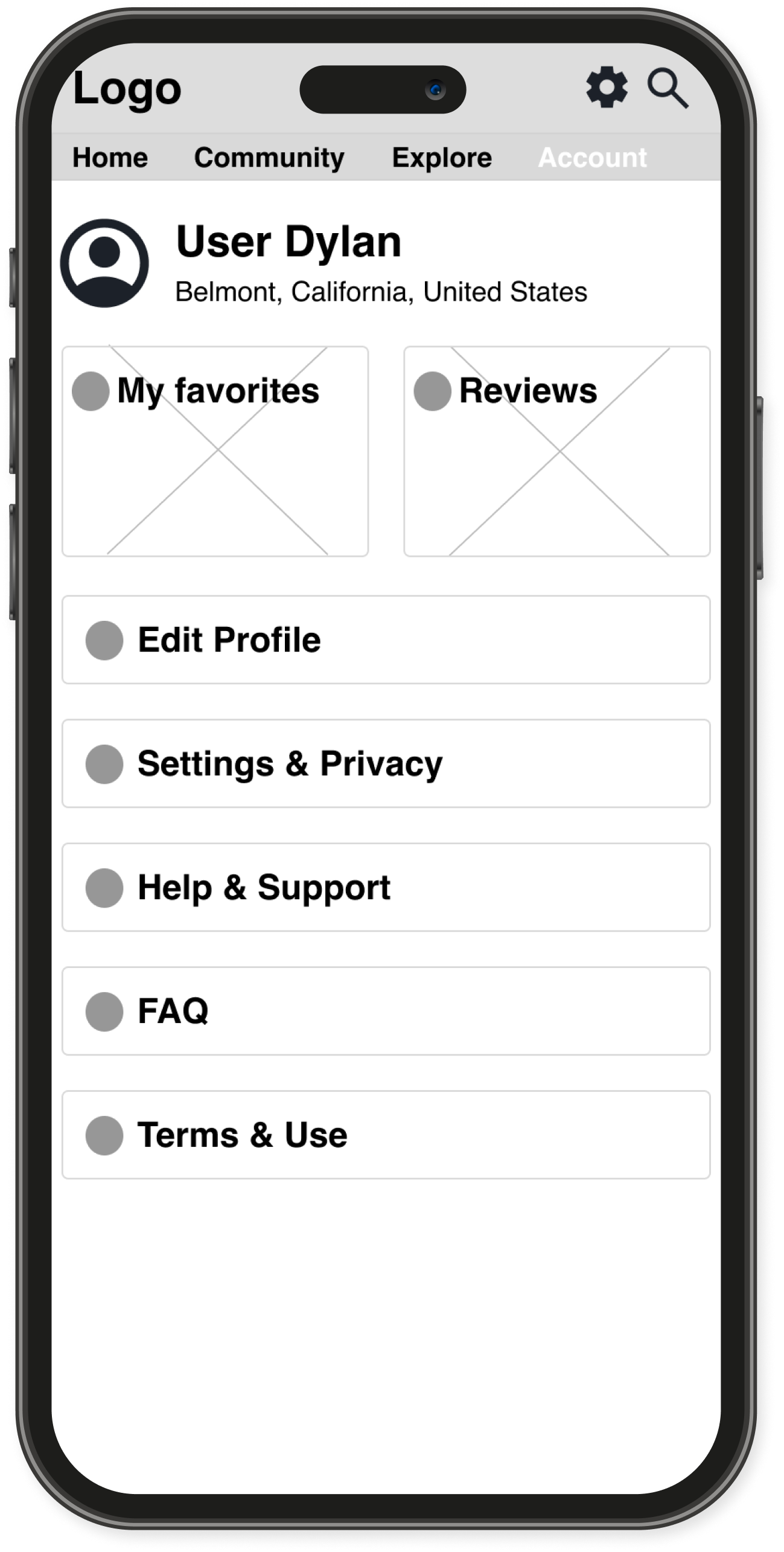
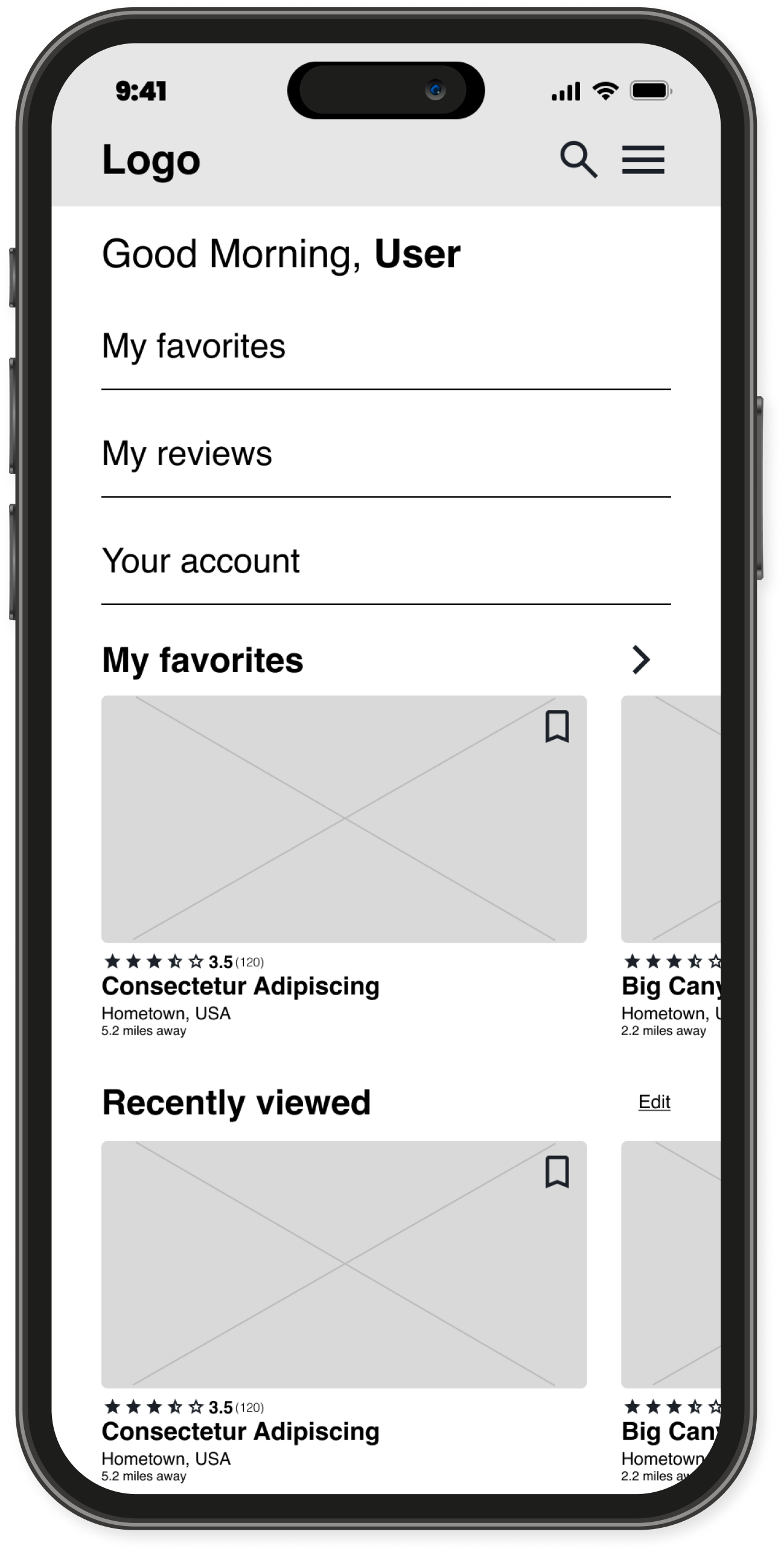
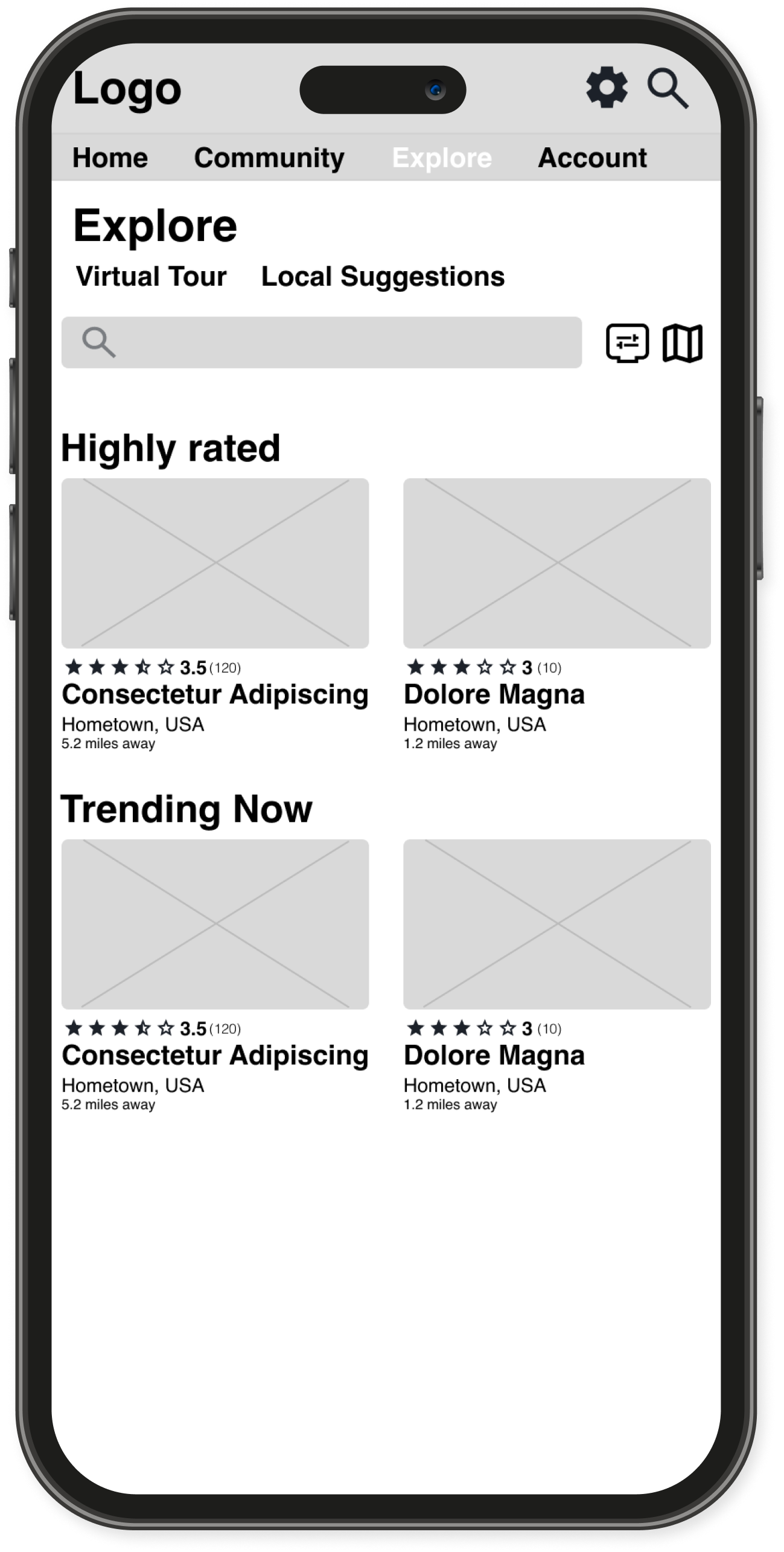
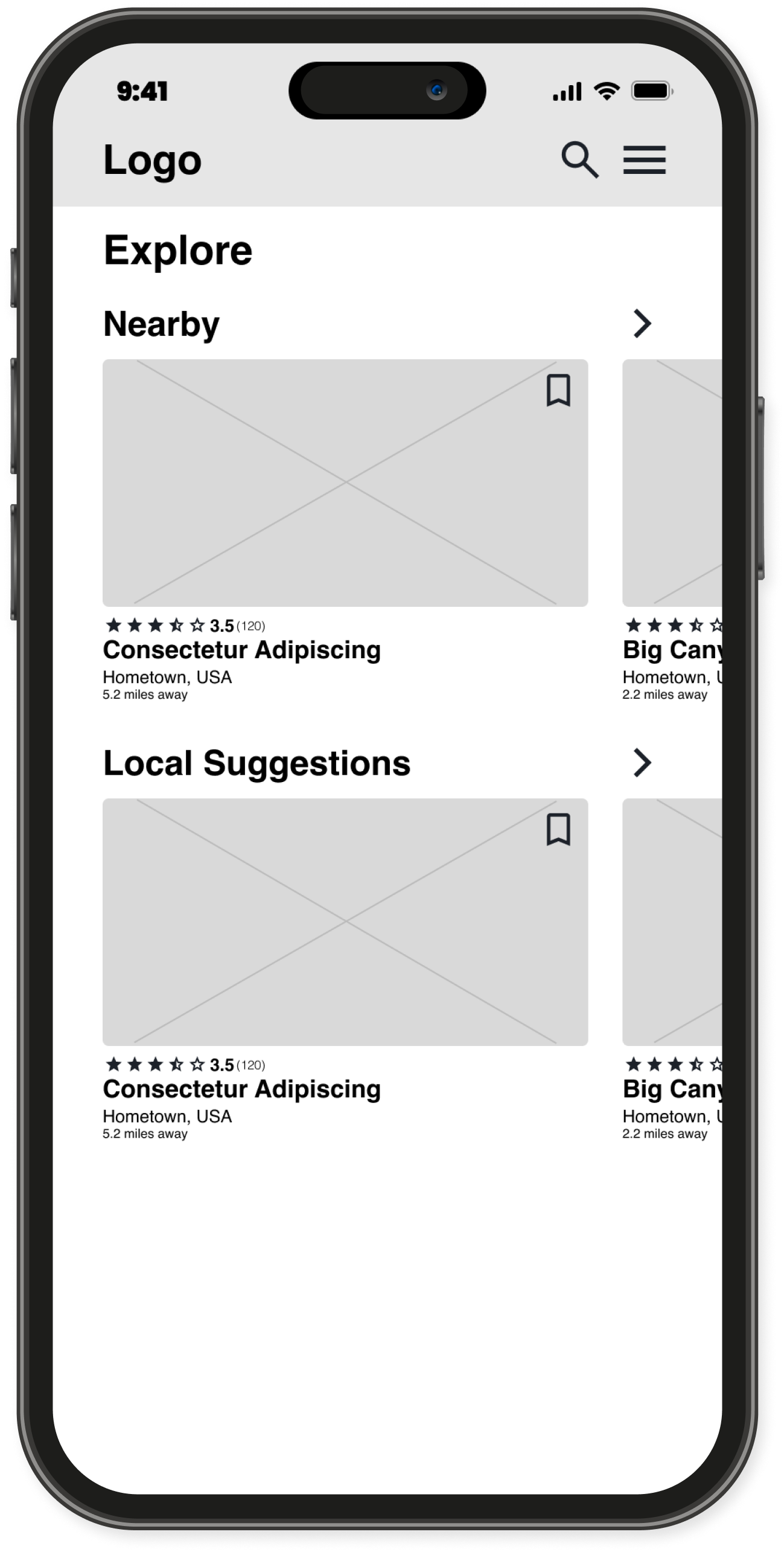
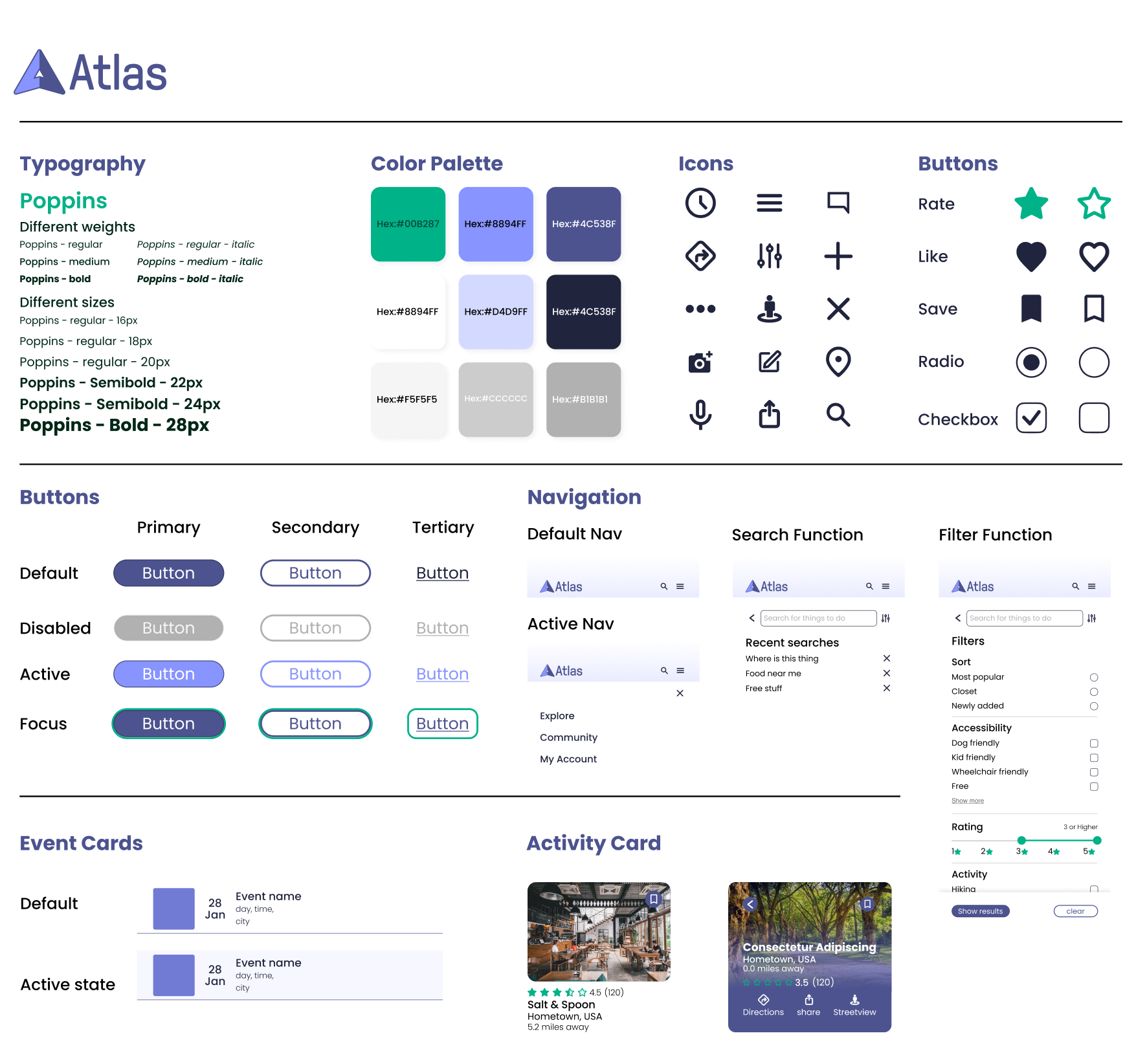
After selecting design patterns that prioritize a human-centric approach, I began developing Atlas' design system, which would serve as the foundation for the high-fidelity prototype.
I conducted a round of usability tests on major task flows. This involved real-time monitoring of 5 participants as they remotely completed key tasks using video calls. The primary objectives of these tests were to validate the design patterns and assess the usefulness and intuitiveness of the main tasks.
• Leave a review
• Find a free activity via search function
• Share an event with a person
• How difficult was it to complete task
• Number of errors through task
• Success rate of completing task


User’s found the design patterns of Atlas clear.
There is sufficient information to find new places to explore.
Users felt familiar with the functionality of the site.
Users felt familiar with the functionality of the site.

Users found the functionality of the search function unclear due to prolonged scrolling to complete action.
Users were confused by the recent searches, as it got in the way of the task.
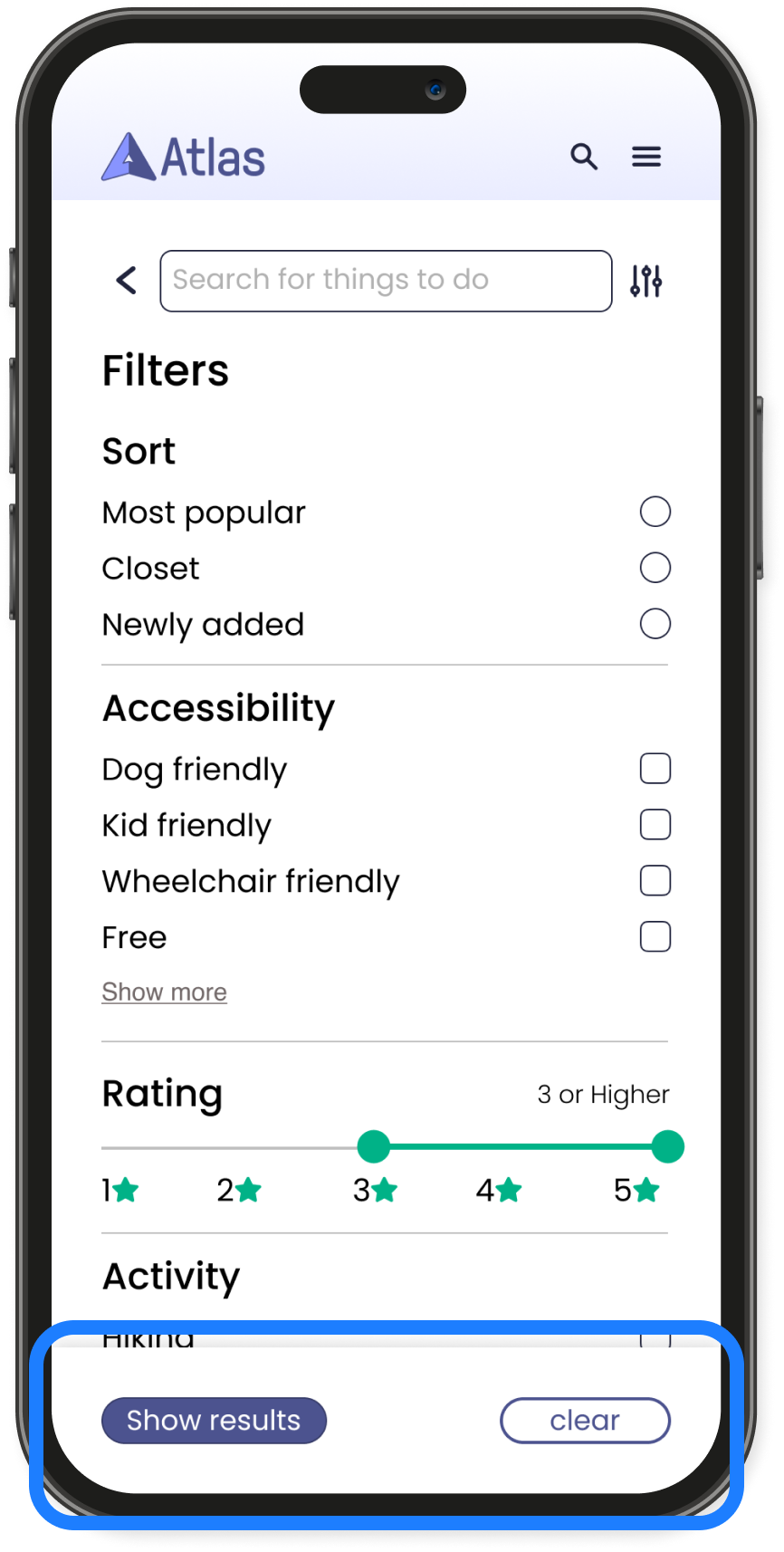
Users didn’t want to scroll all the way down to show results.

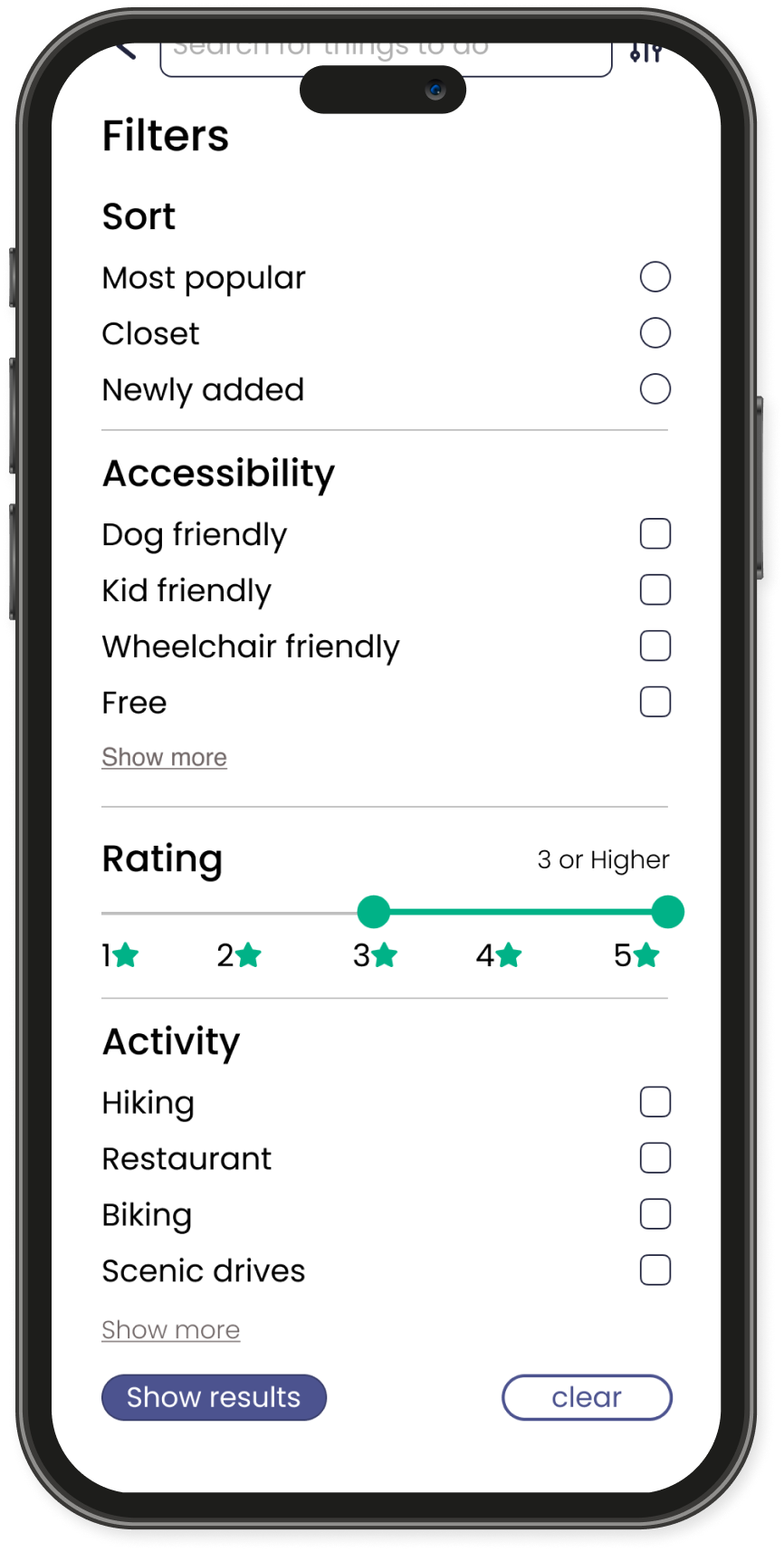
We created a sticky button so users will easily click show results.
After conducting thorough testing, I successfully gathered all the necessary insights from my users and my mentor to develop this final prototype.
.gif)
I invite you to explore my prototype by clicking through it at your convenience.
Based on my research, when users move to a new location, they want to quickly assess its safety and explore the area. I addressed this by creating a solution that utilizes crowd-sourced reviews for parks, businesses, and activities, empowering users to make informed decisions and encouraging further exploration. Additionally, I included a community section that offers events and opportunities for users to connect with their local community, providing valuable insights into the area's dynamics.
To improve this project, it would have been beneficial to carefully consider the order of user testing questions, explore widely recognized design patterns more extensively, and conduct a comprehensive market analysis to identify potential competitors and assess solution viability.